The Challenge
More than 90% of drug candidates fail. Not because they’re ineffective, but because they never reach the right place in the body or trigger harmful side effects. These failures cost billions, delay care, and leave patients without answers.
While AI is speeding up early-stage discovery—like molecule design and target selection—it can’t yet predict what truly determines a drug’s success: how it moves through the body and whether it causes harm. That’s where the Institute comes in.
Our Vision
We’re bridging the gap between discovery and success for tomorrow’s medicines.
Our Mission
Build predictive and generative models to make drug development faster, safer, and more precise.
What We're Building
AI-Powered Tools
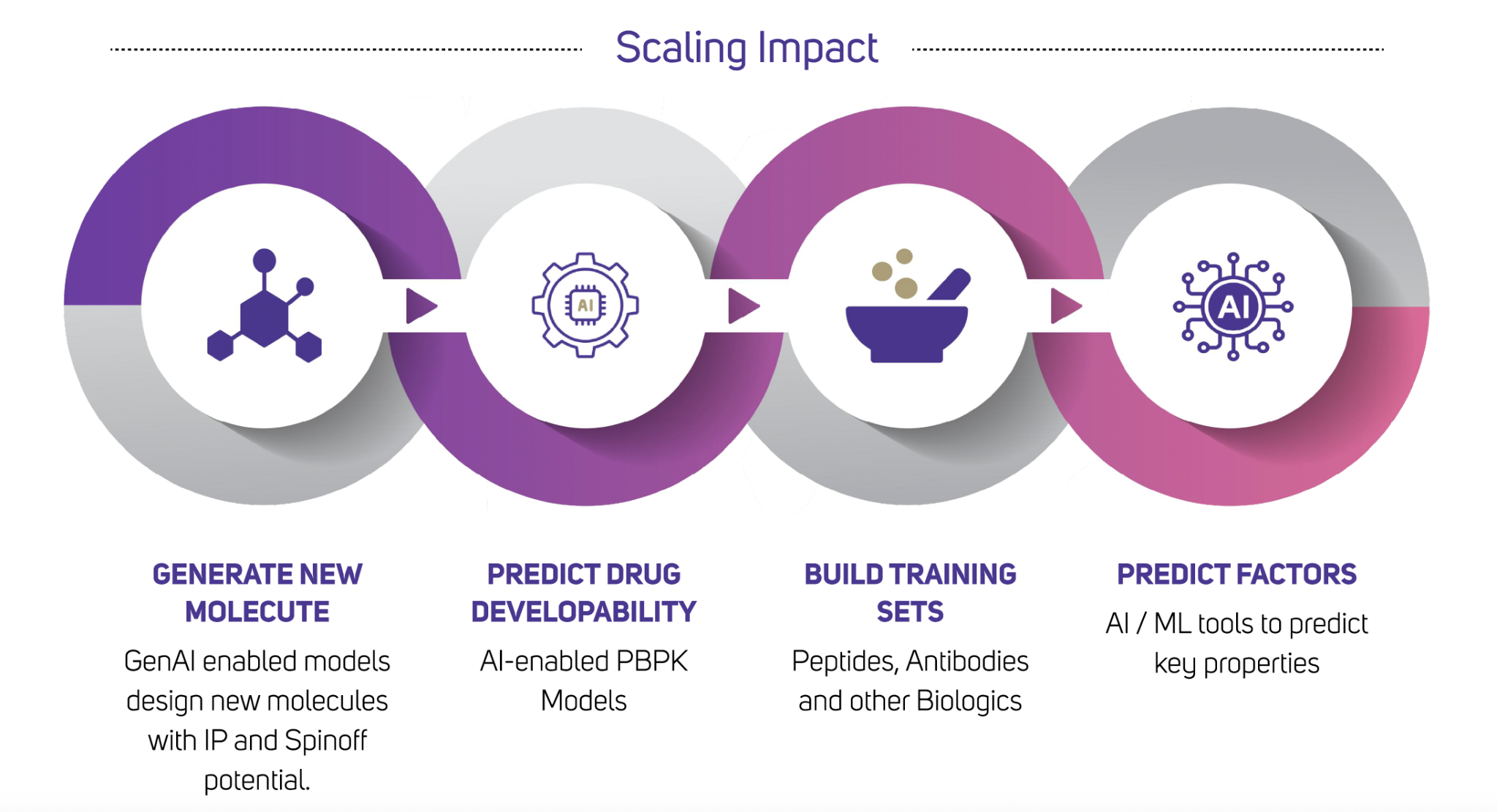
Developing machine-learning models that forecast how drugs move through the body and predict potential toxicity—well before clinical trials.

Smarter Molecule Design
Leveraging generative AI to guide the creation of new, more effective therapeutic modalities.

Regional Expertise Hub
Establishing the Pacific Northwest as a leader in drug disposition and delivery science.

Training Tomorrow's Leaders
Launching interdisciplinary programs for graduate students and postdocs at the intersection of AI, pharmaceutical sciences, and drug delivery.

Our Goals
- Create a hub of regional expertise in the Pacific Northwest to tackle critical challenges in drug disposition and delivery for the new drug modalities of the future.
- Develop AI and Machine Learning tools to predict drug disposition and toxicity for large molecule drugs that will be integrated earlier in the overall drug development process
- Develop an interdisciplinary and translational training program for post-docs and graduate students to train tomorrow’s drug development scientists at the intersection of Al, pharmaceutical sciences, and drug delivery.
- Develop generative machine learning models to enable smart design of new molecules for tomorrow's drugs.
The Impact: Why This Matters
- Accelerated Development: Reduce drug timelines from 5 years to as little as 1–2 years.
- Smarter Investment: Cut R&D costs while improving success rates—getting better therapies to patients, faster.
- Reduce Reliance on Animal Testing: Leverage the power of AI to enable more efficient drug development.
- Safer, More Effective Therapies: Use AI-powered insights to design drugs with fewer side effects and greater precision.
- Next-Generation Talent: Train a new generation of interdisciplinary scientists who combine expertise in pharmaceutical sciences and AI.
Scaling Impact: From Molecule to Medicine